
In Part One, I described your six month flight to Mars.
Now you land on the Red Planet, expecting the glossy renderings that promised it would be humanity’s next great home. But that’s not the reality of life on Mars. The true reality begins the moment your boots touch the regolith.
And that reality is abrasive. Toxic. And underground.
Mars Dust Is Not “Dust”
When we say “dust” on Earth, we imagine something soft. Weathered. Rounded by water and wind.
Mars has neither.
Martian regolith is made of fine, silicate-rich particles that have never been washed smooth by liquid water. Under a microscope, they look like shattered glass—jagged, angular, sharp.
And they cling.
Martian dust is electrostatically charged. It sticks to everything. On the Moon, astronauts from the Apollo program reported that lunar dust infiltrated equipment and irritated lungs and eyes. Mars dust would behave similarly.
Imagine that dust coming into contact with bearings. Airlocks. Mechanical joints. Rover wheels. Environmental seals. This dust won’t just settle politely. It will grind. Try to wipe it off? You’re dragging microscopic shards across sensitive surfaces. Cleaning becomes abrasion. Maintenance becomes constant. On Mars, entropy has a texture. And it’s sharp.
Perchlorates and Toxic Soil
The problem isn’t just mechanical. It’s chemical.
Martian soil contains perchlorates—reactive chemical compounds toxic to humans. They interfere with thyroid function and disrupt cellular processes. They’re not something you want on your skin, in your habitat, or in your food supply.
You cannot simply scoop up Martian dirt and start farming. Every kilogram of regolith would need processing and detoxification before it becomes usable. Every airlock cycle risks dragging contaminants inside.
The billionaire brochures show lush greenhouses beneath glass domes. But the reality of life on Mars is industrial-scale soil chemistry and contamination control.
Forget the Glass Domes
The most persistent image in billionaire Mars marketing is the transparent dome, a glittering bubble against a pink sky. It’s cinematic. It’s hopeful.
It’s also unrealistic.
Mars has no global magnetic field and only a thin atmosphere. Surface radiation levels are far higher than on Earth. A transparent dome without massive shielding would be a slow-cooker for cancer risk.
If you want meaningful protection from radiation, temperature swings, and micrometeorites, you go underground. Think lava tubes. Excavated tunnels. Buried habitats covered in meters of regolith. In other words: bunkers.
Ad Astra Got This Right
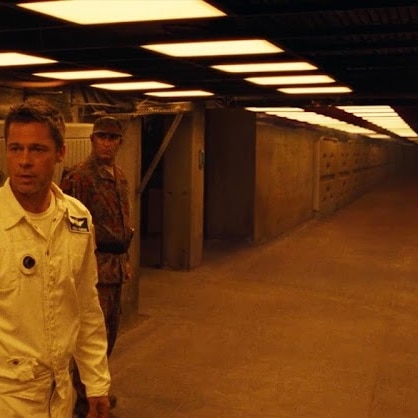
The film Ad Astra offers one of the more honest visualizations of Mars: not a playground, but a utilitarian outpost carved into the planet. Corridors. Concrete. Fluorescent lighting. Claustrophobic. Functional. Stark.
That’s far closer to the reality of life on Mars than any sunlit biodome. You won’t stroll beneath open skies. You’ll move through pressure doors.
Babylon 5’s Downbelow
Science fiction also understands something the marketing decks ignore: class stratification.
In Babylon 5, the underbelly of the station—“Downbelow”—housed those who couldn’t afford to leave. It was cramped. Improvised. Forgotten.
Translate that to Mars.
At first, only the wealthy and elite can afford the trip. But what happens when systems fail? When return windows close? When someone can’t afford the ride home? You may not get domed gardens. You may get concrete corridors beneath a hostile planet, a permanent Downbelow under red rock.
The reality of life on Mars will not erase human inequality. It will intensify it.
Mars Is Not a Resort
Let’s stack the environment honestly:
- An unbreathable CO₂ atmosphere
- Average temperatures around -80°F
- Radiation exposure
- Electrostatic, glass-like dust abrading every surface
- Toxic perchlorate-laced soil
- Total dependence on life-support systems
Every breath engineered. Every calorie manufactured. Every system one failure away from catastrophe. This isn’t “rugged individualism.” It’s industrial survival.
From Utopia to Concrete
The brochures paint a glass-domed utopia, with sunlight filtering through transparent ceilings, children playing beneath alien skies. The reality of life on Mars looks more like reinforced concrete, buried habitats, recycled air, and constant maintenance against a planet that is actively trying to kill you.
So here’s the question no billionaire rendering answers: why would you travel 140 million miles to live a bunker life?
But let’s say a trip to Mars was on your bucket list. You bought your ticket. You survived the radiation of deep space. You vacationed in a subterranean concrete maze on a frozen desert world. Now you’re ready to come home.
In Part 3, I’ll talk about the return trip, and why getting back to Earth may not have the triumphant ending everyone, especially the billionaire class, expects.
Jayson L. Adams is a technology entrepreneur, artist, and the award-winning and best-selling author of two science fiction thrillers, Ares and Infernum.
Jayson writes sci-fi thrillers that explore what extreme situations reveal about who we really are. His novels combine high-stakes science fiction with deeper questions about identity, courage, and human nature. You can see more at www.jaysonadams.com.