
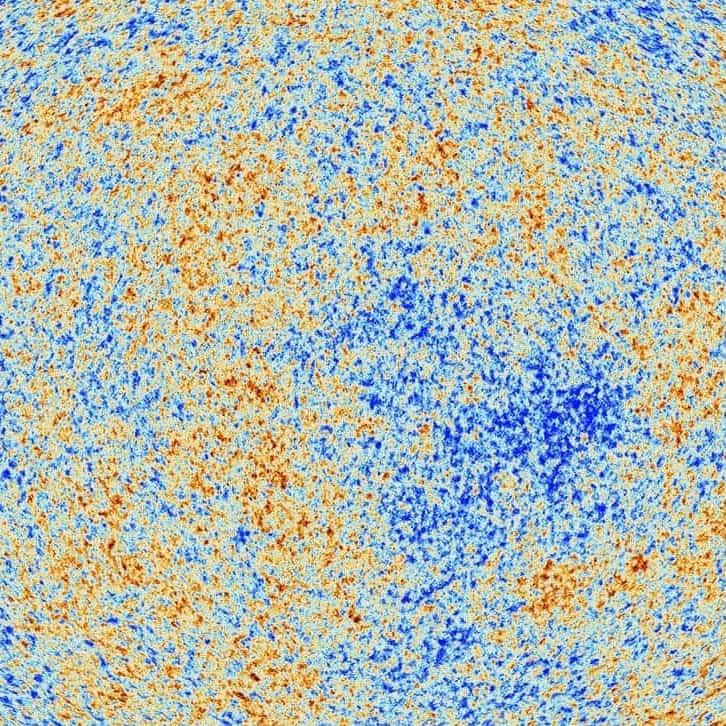
Cosmology is supposed to be the science that explains the universe at the largest scale: its origin, history, and fate. For decades, the cosmic microwave background (CMB) has been the crown jewel of observational evidence supporting the Big Bang and the standard ΛCDM cosmological model. But now, a group of astrophysicists is arguing that we may have fundamentally misinterpreted what the CMB actually is.
If they’re right, the implications aren’t minor tweaks.They cut to the core of how we understand the universe.
What Is the CMB, and Why It Matters
The cosmic microwave background is a bath of microwave radiation that permeates the universe with an almost perfectly steady temperature of about 2.7 Kelvin. It’s extraordinarily uniform, but with tiny temperature fluctuations that cosmologists have interpreted as the imprint of the universe’s earliest density variations—the seeds of galaxies and clusters.
In the standard Big Bang picture:
- The early universe was a hot, dense plasma of nuclei and electrons.
- Light couldn’t travel freely until atoms formed and the plasma “decoupled.”
- That “decoupled” light shifted (or redshifted) over billions of years as the universe expanded.
- What we see today as the CMB is the fossil radiation from that moment, a snapshot of the infant cosmos.
This interpretation is the backbone of ΛCDM (Lambda Cold Dark Matter) cosmology, which uses CMB data to extract critical parameters like the universe’s age, matter content, and geometry.
The New Contender: Early Galaxies, Not Primordial Plasma
Here’s where it gets interesting.
New research incorporating data from the James Webb Space Telescope (JWST) observes something surprising: galaxies formed earlier and grew far larger and more luminous than the standard model predicted. Instead of being small and slow to form, these galaxies were bright, massive, and productive in the early universe. And that matters.
Light from these early galaxies would have:
- heated nearby dust,
- scattered and thermalized as it traveled,
- and stretched by cosmic expansion, just like CMB radiation is.
When the researchers calculate how this diffuse, thermalized starlight would look today after redshifting, they find something remarkable: its temperature falls right in the range where we observe the CMB.
Even more startling, their most conservative estimates show that massive early galaxies could account for up to the full present‑day energy density of the CMB.
That’s not a minor discrepancy. Let that sink in.
Why This Challenges ΛCDM
ΛCDM isn’t a loosely connected set of ideas, it’s a tightly knit theoretical framework. The key parameters we derive from cosmology—things like the amount of dark matter and dark energy, the Hubble constant, the age of the universe—all come from analyzing the CMB as leftover plasma radiation.
If the CMB isn’t primarily plasma radiation but thermalized light from early galaxies, then:
- The assumptions that feed ΛCDM analyses are wrong.
- The parameter values derived from CMB studies may be invalid.
- The entire interdependent structure of standard cosmology comes into question.
This isn’t a tweak to theory, it’s a foundational challenge.
No, This Doesn’t Kill the Big Bang Entirely
There’s an important distinction that often gets lost in translation. When people say “Big Bang,” they mean different things:
- The universe expanded from a hot, dense state, a notion supported by redshift observations.
- The very first instant of the universe’s existence. Not addressed by this finding.
- The Big Bang as the precise ΛCDM model with dark matter and dark energy. This is what’s being challenged.
So this paper doesn’t deny that the universe expands. It doesn’t deny a hot early phase. What it does call into question is the interpretation of the CMB itself, and therefore the specific framework we’ve been using to read it.
What Comes Next? Skepticism and Scrutiny
No major cosmological claim can stand without intense scrutiny, and that’s exactly what this will get. Critics will examine:
- The assumptions about early galaxy luminosity and dust content
- The calculations linking that radiation to current CMB measurements
- The dependency of cosmological parameters on those measurements
But it won’t be easy to dismiss, not if the numbers hold up.
And here’s the kicker: one of the authors, Pavel Kroupa, is known for advocating alternatives to dark matter, like modified gravity. Even so, the core point of the paper is not about gravity theories, it’s the observational claim that we might be misreading the CMB’s origin.
That, on its own, deserves attention.
Cosmology Is Asking Better Questions
If this new interpretation holds, it forces cosmologists to reconsider what they’re actually measuring and why. For decades, astrophysicists treated the CMB as a clean cosmic signal from the early plasma. But what if it’s primarily diffuse galactic light from the early universe?
That’s the sort of shift that doesn’t just adjust a parameter, it reshapes our understanding of how the universe evolved.
And whether this idea ultimately prevails or evolves into something even better, one thing is certain: cosmology just got more interesting.
Jayson L. Adams is a technology entrepreneur, artist, and the award-winning and best-selling author of two science fiction thrillers, Ares and Infernum.
Jayson writes sci-fi thrillers that explore what extreme situations reveal about who we really are. His novels combine high-stakes science fiction with deeper questions about identity, courage, and human nature. You can see more at www.jaysonadams.com.