
Years ago, Sun Microsystems ran a recruiting ad with the headline:
“We’re looking for good ideas.”
I remember a friend seeing it and immediately responding, “Please give us some.”
That line has stuck with me for decades, and it came roaring back when I saw Google’s new Pixel HiLight feature.
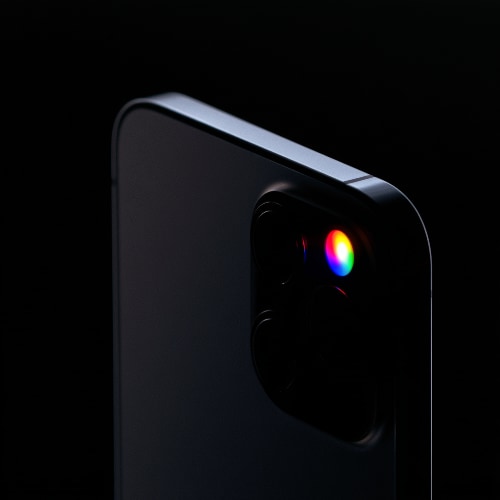
Because Google has done something genuinely interesting. It put a multicolor LED into the camera flash assembly on the back of the new Pixel 11 Pro phones. It can pulse, change colors, and provide information while the phone is lying face down.
Cool.
So what can you do with it?
Well…
We Built It. Now What?
At launch, Google’s answer is essentially two things.
HiLight can glow in a chosen color when one of your favorite contacts calls. And it can animate while you’re talking to Gemini, indicating whether the AI is listening, thinking, or responding.
That’s pretty much it.
Not general notifications. Not Gmail. Not Messages. Not arbitrary third-party apps. Not even the obvious resurrection of those colored notification LEDs Android phones had years ago.
Google designed a new piece of hardware, manufactured it, incorporated it into several phones, wrote software to control it, and shipped it around the world.
Apparently, somewhere along the way, nobody came up with much for it to do.
That strikes me as an interesting window into Google’s continuing struggle as a hardware company.
A Search Company Builds a Phone
Google is one of the most extraordinary technology companies ever created. It has built astonishing software infrastructure, pioneered technologies that underpin much of the modern internet, and helped drive the current AI revolution.
But hardware requires a somewhat different discipline.
Once you put something into a physical product, it’s there.
Software teams can experiment. Ship a feature. See whether anyone uses it. Change it. Expand it. Kill it. Google has famously done all of those things.
Hardware doesn’t work that way.
Every HiLight assembly has a bill-of-materials cost. It occupies physical space. It has to be engineered, tested, manufactured and supported. However small those costs may be individually, multiply them by millions of devices and you’ve made a real commitment.
That’s why I find HiLight so strange.
It feels like a software experiment that accidentally became hardware.
Apple Probably Wouldn’t Have Shipped It
This is also where the contrast with Apple becomes interesting.
Apple certainly ships features that fail to catch on, but its traditional hardware philosophy has often been to hold things back until it believes they have a compelling reason to exist. The original iPad is a fascinating example. Teardown specialists found an unusually large connector and unused solder points on its logic board that appeared consistent with plans for a camera, while early enclosure parts contained space that could accommodate one. Apple nevertheless shipped the first iPad without a camera and waited until the iPad 2 to add cameras alongside FaceTime.
Google often seems more comfortable with the opposite philosophy:
Ship it. We’ll figure out what else it can do later.
And perhaps Google will.
In fact, the possibilities aren’t difficult to imagine. Different colors for different apps. Calendar warnings. Urgent messages. Charging status. Timers. Sports scores. Navigation cues. Smart-home alerts. An API allowing developers to invent things Google hasn’t thought of.
That’s what makes the current implementation so baffling. Google has already paid the difficult price: it built the hardware.
It just hasn’t given the hardware much of a reason to exist.
Someone Else Already Had Some Ideas
There’s a funny postscript to this story.
The Pixel 11 phones have barely arrived, and a third-party developer has already created HiLight Studio, software that expands Google’s LED to support arbitrary app notifications, custom colors, brightness controls, and animated patterns.
In other words, Google shipped the hardware and somebody outside Google promptly started figuring out what to do with it.
Maybe that’s ultimately the strategy. Build an interesting capability, put it into people’s hands, and see what emerges. That approach has produced wonderful things in technology. But it’s a considerably more defensible strategy when the experiment is software.
Hardware costs money. Hardware takes space. Hardware consumes engineering resources. And hardware can’t be removed from millions of phones with the next software update if nobody finds it useful.
Which brings me back to that old Sun Microsystems ad.
Google has built a clever little multicolor light into the back of its newest Pixel phones.
Now it’s looking for good ideas.
Jayson L. Adams is a technology entrepreneur, artist, and the award-winning author of The Quantum Mirror, Ares, and Infernum.
His novels blend high-stakes science fiction, psychological tension, and character-driven suspense. Explore the books at www.jaysonadams.com.