
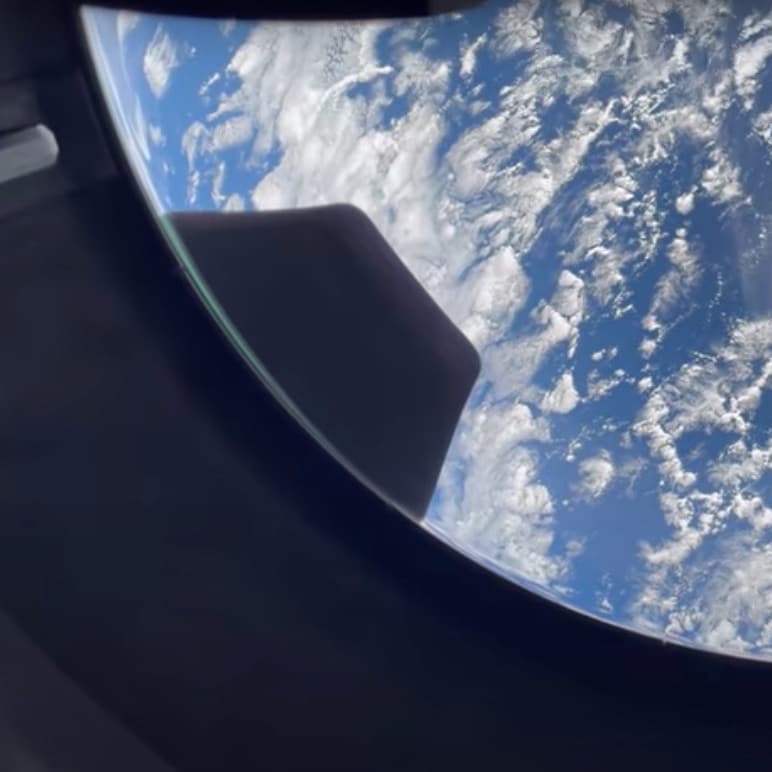
In Part 1, I explored the radiation challenges of traveling to Mars.
In Part 2, I discussed the reality of life on Mars—the dust, the toxicity, the underground existence that replaces the fantasy of glass domes.
Now we come to the part the glossy brochures don’t mention at all, the part that’s taken for granted: returning from Mars.
Yes, it’s another six months in deep space, and yes, that means another prolonged exposure to radiation. But by the time Earth comes back into view—by the time that blue sphere fills your porthole—radiation is no longer the most serious problem you face.
The real problem is that you’ve changed.
The Arrow Only Points One Way
Whenever we talk about going to Mars, the conversation is framed like geography. Distance. Trajectories. Fuel. As if space were just a longer version of a transoceanic flight.
But physics doesn’t work that way. There is a direction to things—a one-way flow from order to disorder. You can scramble an egg, but you cannot unscramble it. You can spill a glass of wine, but you cannot pull it back into the glass.
That’s not philosophy. That’s thermodynamics.
And when you apply that lens to returning from Mars, the mission starts to look less like a round trip and more like a one-way transformation. The question stops being “Can we get there and back?” and becomes “What happens to the system—the human system—along the way?”
The Gravity Trap
Here’s the part no one sells in a keynote presentation: gravity. Or lack of it.
Mars has about 38% of Earth’s gravity. Spend extended time there, and your body adapts. Your cardiovascular system no longer needs to work as hard. Your skeletal system no longer needs to support the same load.
Biology responds by optimizing. Muscle mass decreases. Bone density drops. Your heart—literally—can shrink because it doesn’t need to generate the same pressure.
Then you leave Mars and spend another six months in microgravity, where those effects continue.
By the time you begin your return to Earth, you are no longer operating with an Earth-normal body. You are operating with something closer to a Mars-adapted one.
That distinction matters.
Earth Is No Longer Home
Reentry isn’t just a technical event. It’s a biological one.
As your capsule hits Earth’s atmosphere, forces build. Gravity reasserts itself. Systems that have been underused for months—or years—are suddenly pushed to perform at full capacity.
Let’s assume you survive reentry. The parachutes deploy. The capsule lands.
You open the hatch, and for the first time in years, you are back in a full 1G environment.
Standing up is no longer trivial.
Your cardiovascular system struggles to push blood upward against gravity. Your brain may not receive adequate oxygen. Loss of consciousness becomes a real possibility.
Meanwhile, your bones—now less dense, more brittle—are asked to support your full body weight. Fractures are not a dramatic edge case. They are a credible outcome.
You are being reintroduced to the environment you evolved for, but you are no longer fully adapted to it.
Mars didn’t just challenge you.
It changed you.
You Were Never Separate
We like to think of ourselves as independent agents—humans who can move from one environment to another with enough technology. But that’s not how biology works.
You are not separate from Earth. You are an extension of it. Your physiology is tuned to its gravity, its atmosphere, its magnetic shielding.
When you leave that system, you don’t just travel. You begin to drift out of equilibrium with the conditions that made you viable in the first place.
Technology can delay that drift. It cannot eliminate it.
The Myth of the Round Trip
The billionaire vision of Mars presents a clean narrative: go, live, return. A new frontier, fully accessible with enough engineering and ambition.
That narrative treats biology like software—something you can patch, update, or brute-force into compliance.
But biology isn’t software. It’s hardware shaped over billions of years for one environment. And when you push that hardware beyond its design constraints for too long, it doesn’t simply degrade. It adapts in ways that may not be reversible.
You survived the journey out. You endured life in a bunker beneath the Martian surface. And now you’ve completed the trip back. But returning from Mars isn’t just about reaching Earth. It’s about whether the version of you that arrives is still compatible with the world you left behind.
That’s the part no one puts in the renderings. But it’s the part that should make us pause—not because exploration isn’t worth pursuing, but because the cost is far more profound than distance, fuel, or time.
It’s written into the physics of the universe.
And into us.
Jayson L. Adams is a technology entrepreneur, artist, and the award-winning author of The Quantum Mirror, Ares, and Infernum.
His novels blend high-stakes science fiction, psychological tension, and character-driven suspense. Explore the books at www.jaysonadams.com.