
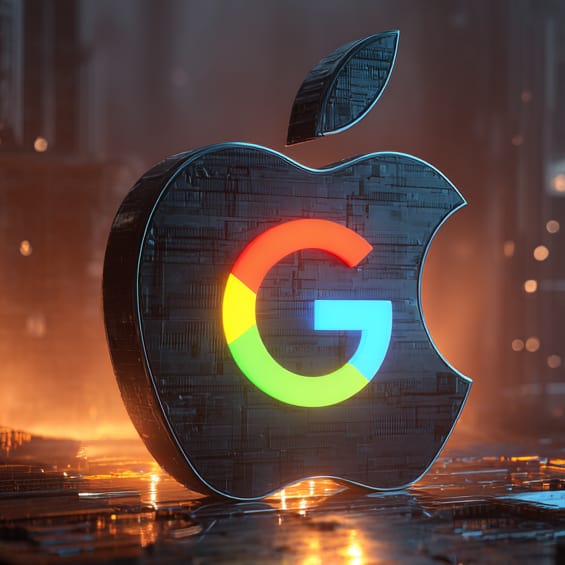
“Apple picks Google Gemini over ChatGPT to power the new AI Siri.“
That’s a headline you didn’t expect to see in the tech press this year (courtesy of Mashable).
Yes, that Apple. The company that mastered the closed ecosystem and yearly upgrade treadmill has turned to a hated rival to breathe AI life into Siri. A decade ago this would have been unthinkable. Two years ago it would’ve been corporate heresy. Today, Siri powered by Google Gemini is the latest bit of drama in the Silicon Valley soap opera.
Apple (Still) Late to AI
Let’s be clear: anyone who’s used ChatGPT in earnest since the end of 2022 (like me) has been waiting for Apple to meaningfully embrace AI in its products. Yet here we are in 2026, three+ years into the generative AI revolution, and Apple’s big move is to outsource the brain of Siri instead of build it from scratch. Even then, analysts have been tempering expectations that this overhaul will ship in Apple’s ’27 software releases because of the legendary rigidity of their product cycles. Meaningful updates often arrive months after the keynote dust settles; shipping an AI‑infused Siri by the end of this calendar year might be optimistic at best.
Google? Really?
Yes. Google. The very company Apple has long positioned as the foil to its own principles. You know the narrative: Apple is the privacy champion, the company that fights for your data. Google is, well, let’s just say if Apple is the privacy pope, Google would be the anti‑Christ of user data. They’re the company whose entire business model revolves around capturing, correlating, and monetizing everything users do online.
Some folks inside Google still remember the old “Don’t Be Evil” motto. I watched that ethos fade firsthand. We went from VPs apologizing to the entire company for the tiniest user trust slip‑ups to decisions that would have been unthinkable a few years earlier (Google search engine for the Chinese police state, anyone?). This wasn’t just corporate sheen wearing thin, it was a cultural transformation.
And if you need a cautionary vignette about where that transformation landed, there’s the now‑infamous case of a father who took photos of his sick toddler’s groin at a doctor’s request to document a medical issue. Google’s automated systems flagged the images, disabled his account, and reported him to police despite the doctor’s involvement and the absence of any criminality. Police later concluded no crime occurred, but the man never regained possession of his data.
That kind of heavy hand, where a company’s automated systems override context and nuance, is exactly why I refuse to let anything resembling my personal digital life swim in Google’s waters. So the idea that Apple’s next Siri brain will be built on that infrastructure? It’s … surprising, to say the least.
Culture Clash: Privacy vs. Data Harvesting
Apple’s brand sells privacy. It’s the company that runs advertisements telling consumers they’re “in control” of their data. Meanwhile, Google builds services that know what you looked at last Tuesday, what you’re likely to buy next month, and which route you’ll drive home tonight. If you wanted a cultural juxtaposition more stark than this partnership, I’m not sure what it would be—maybe a vegan chef hosting a big‑game barbecue.
Yet here we are: Apple relying on Google’s AI stack to breathe life one of its most iconic products. It’s a testament to how much AI has reshaped user expectations, and how far behind Apple’s original plans for “Apple Intelligence” really were.
So What Does This Mean for Users?
If executed well, a version of Siri powered by Google Gemini could finally usher in the voice assistant Apple promised a decade ago, one that actually understands context, carries conversations, and integrates deeply with apps and services. If it doesn’t execute well, it could feel like Apple’s version of putting lipstick on a competitor’s pig.
And for privacy‑minded users like me? I’ll continue to keep my personal data well out of Gemini’s reach. Powering Siri with a model licensed from a company whose business is data isn’t inherently bad, but it’s a reminder that in tech, we often trade convenience for surveillance, even when the marketing tells us otherwise.
Apple’s AI‑Siri chapter is just beginning. Judging by the plot twists so far, it’s going to be one of the most interesting tech sagas of the decade.
Jayson L. Adams is a technology entrepreneur, artist, and the award-winning author of The Quantum Mirror, Ares, and Infernum.
His novels blend high-stakes science fiction, psychological tension, and character-driven suspense. Explore the books at www.jaysonadams.com.